
Choosing linen for a window project is less about finding one “best” fabric and more about deciding what you want the window to do.
Do you want a café curtain that softens the view but keeps the kitchen bright? A Roman shade with a little more structure? Or a full window treatment that feels relaxed and natural without making the room dark?
Linen is a beautiful choice for all of these projects because it brings texture, movement, and a soft connection to daylight. The key is to consider light, privacy, drape, and the style of treatment together before choosing a fabric.
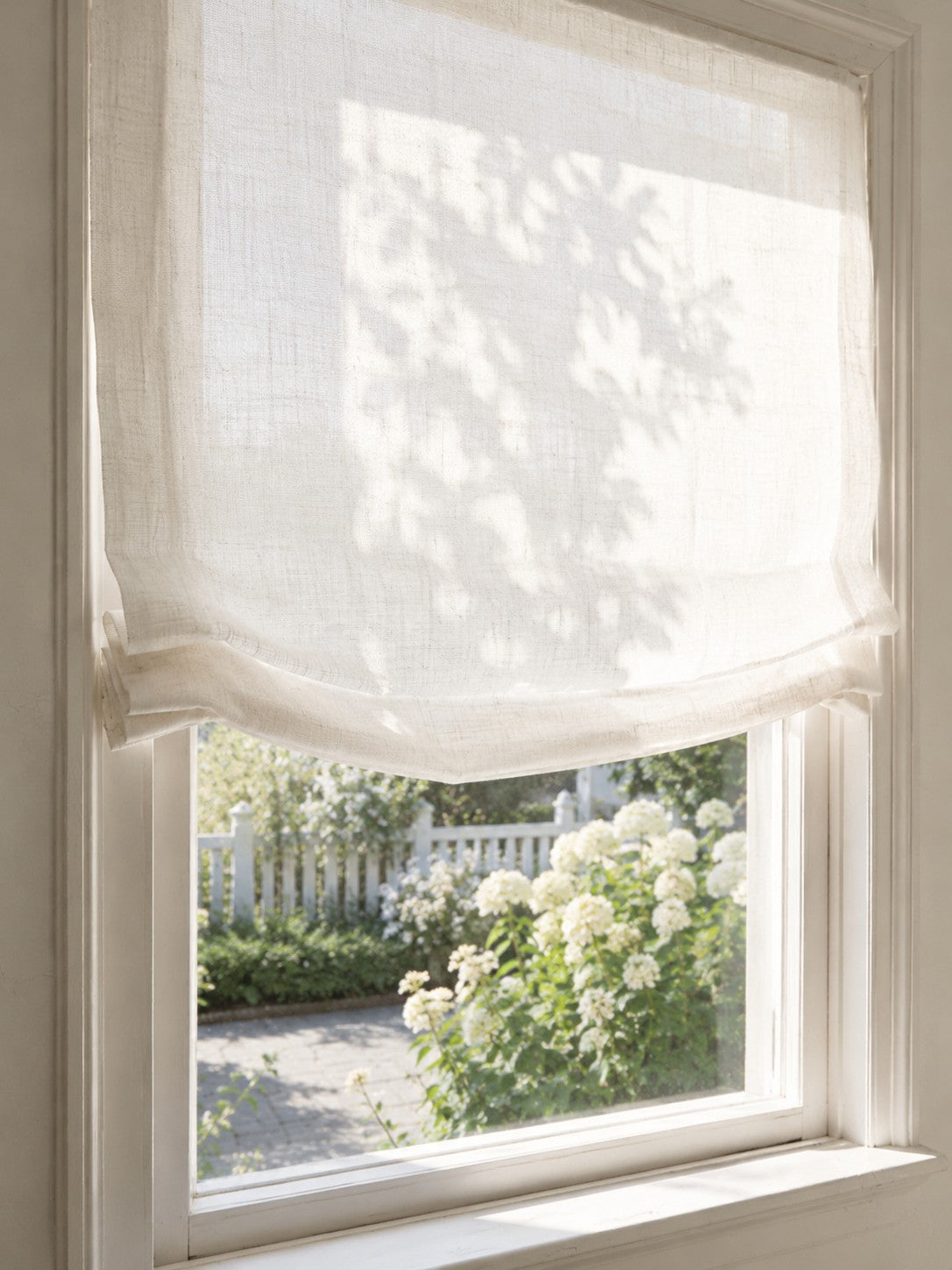
Start with the job your window treatment needs to do
A café curtain, Roman shade, and full-length curtain panel use fabric differently.
Café curtains usually cover only the lower part of a window. Their purpose is often to create privacy at eye level while leaving the upper portion open to daylight. They are especially useful in kitchens, breakfast nooks, bathrooms, and street-facing windows.
Roman shades cover the full window and fold upward when raised. Because the fabric is structured around a mechanism or mounting board, the weight and body of the linen will affect how the shade looks when it is flat and when it folds.
Full curtain panels create a softer, more flowing effect. They often use more fabric, so drape and fullness become especially important.
Before shopping, ask one simple question: do I want this window treatment to filter light, create privacy, add structure, or do a balance of all three?
Choose light based on the room, not just the fabric color
Linen changes the feeling of daylight rather than removing it completely.
A lighter or more open weave can soften glare and create a calm, airy look. This can work beautifully for a café curtain in a kitchen or a living room where you still want to enjoy natural light.
A medium-weight linen generally has more visual substance and can create a slightly more grounded look. It is often a good choice when you want a café curtain or Roman shade to feel more substantial while still keeping linen’s natural texture.
However, light control does not depend on weight alone. Weave density, fabric color, the direction of the window, and whether the fabric is lined all affect the final result.
The most reliable way to judge a fabric is to hold a sample up at the actual window at different times of day.
Daytime privacy and nighttime privacy are different
This is one of the most important things to understand before making linen curtains.
During the day, light outside is usually stronger than light inside. A café curtain can reduce visibility into a room while still letting daylight through.
At night, the relationship changes. When indoor lights are on and it is dark outside, lighter or more translucent fabrics can reveal more of the room’s shape and movement.
That does not mean unlined linen café curtains are a poor choice. It simply means they are best for projects where softened daylight and partial privacy are the goal.
For rooms that require stronger nighttime privacy, consider a denser linen, greater fabric fullness, layering with another treatment, or adding a lining to a custom window treatment.
Lightweight linen: soft light and an airy feel
Lightweight linen works especially well when you want the window treatment to feel relaxed, light, and naturally textured.
It is a lovely option for:
- Café curtains in bright kitchens and breakfast spaces
- Light-filtering Roman shades
- Small windows where heavy fabric could feel overwhelming
- Layered window treatments
- Projects where the character of linen and daylight is part of the design
Lightweight linen is not intended to create a blackout effect. Its beauty is in the way it softens the view and lets a room remain bright.
For a café curtain, this is often exactly what you want.
Medium-weight linen: more body without losing the natural look
Medium-weight linen is a versatile choice when you want more structure, more visual coverage, or a little more substance in the finished treatment.
It is well suited to:
- Café curtains where you want a fuller, more tailored appearance
- Roman shades with a clean, flat face
- Window treatments that need a little more body
- Projects where texture is visible from across the room
- Curtains and shades that benefit from a more defined fold
Medium-weight linen can still feel soft and natural. It simply holds its shape differently from a lighter fabric.
For many makers, it is a comfortable middle ground: substantial enough for window treatments, but not so heavy that the finished piece loses linen’s ease.
How fabric weight affects Roman shades
Roman shades are not only about the fabric when the shade is down. The fabric also needs to look good as it folds upward.
A fabric with more body can help create a clean, tailored shape in a flat Roman shade. A lighter, more pliable linen can create a softer and more relaxed look.
There is no universal rule that one weight is always better. The shade style matters too.
If you prefer crisp lines and a more structured appearance, medium-weight linen is often a practical starting point. If you want a softer, more casual look with gentle light filtration, lightweight linen can be a better fit.
For a first project, making a small test sample or ordering a swatch is worthwhile. It is much easier to assess texture, opacity, and fold behavior in person than from a screen.
Do café curtains need lining?
Usually, no.
Many café curtains are intentionally unlined because they are meant to balance privacy with daylight. An unlined linen café curtain keeps the treatment light, relaxed, and easy to live with.
Lining becomes more relevant when the goal changes. For example, lining may be worth considering when you need stronger nighttime privacy, more light control, additional body for a Roman shade, or a more formal finish.
For most everyday café curtain projects, the fabric itself, the amount of window covered, and the fullness of the finished curtain matter more than adding a lining.
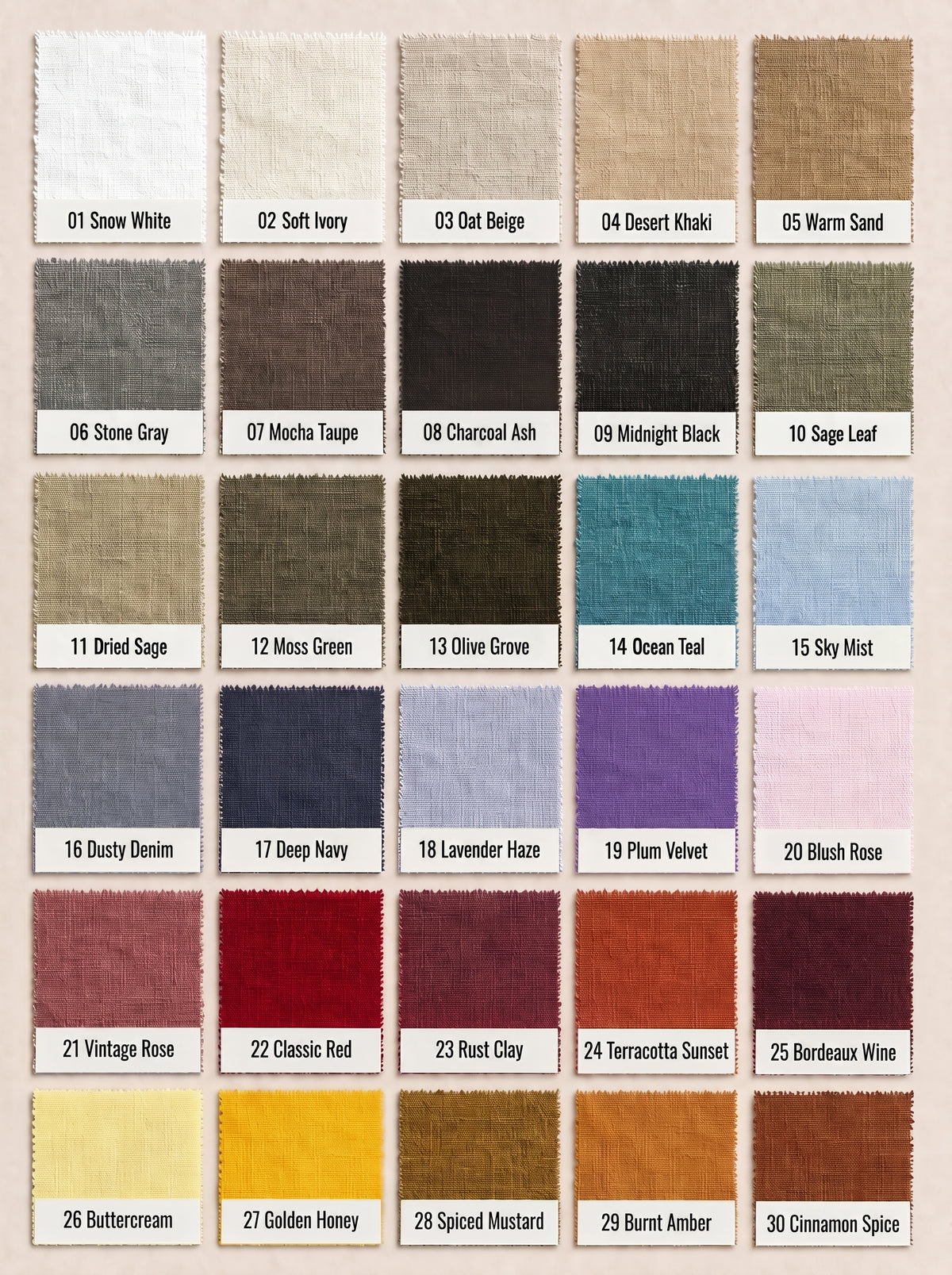
Order a swatch before cutting yardage
Linen has qualities that photographs cannot fully show: texture, softness, weave, opacity, and the way the color changes in daylight.
A swatch is especially useful when:
- You are choosing between lightweight and medium-weight linen
- The project needs a specific level of privacy
- You are matching cabinets, paint, tile, or wood tones
- You are making a Roman shade and want to test body and fold
- You are deciding whether an unlined treatment will work in the room
Place the sample against the window in morning light, afternoon light, and evening indoor light. This gives you a much more accurate picture of how the finished treatment will feel.
A simple way to decide
Choose lightweight linen when you want a bright, airy café curtain or a soft light-filtering Roman shade.
Choose medium-weight linen when you want more structure, a fuller café curtain, or a Roman shade with more presence.
Consider lining only when your project needs stronger privacy, greater light control, or a more tailored finish.
And whenever the final look matters, begin with a swatch.
A well-chosen linen does more than cover a window. It changes the quality of light in a room, adds quiet texture, and makes a handmade project feel considered from the beginning.
Frequently asked questions
Is linen good for café curtains?
Yes. Linen is a natural choice for café curtains because it softens daylight, adds texture, and can provide partial privacy without making a room feel closed in.
Is lightweight or medium-weight linen better for Roman shades?
Both can work. Lightweight linen creates a softer, more relaxed effect. Medium-weight linen provides more body and is often useful for a cleaner, more structured Roman shade.
Do unlined linen curtains provide privacy?
They can provide useful daytime privacy, especially when they cover the lower half of a window. At night, when indoor lights are brighter than outdoors, lighter linen may reveal more interior shapes. Consider the room and the level of privacy you need.
Should I buy a swatch before making linen window treatments?
Yes. A swatch lets you see the true color, texture, opacity, and drape of linen in your own light before committing to yardage.
Related resources
- Lightweight Linen Fabric — for airy café curtains and softly filtered Roman shades.
- Medium-Weight Linen Fabric — for café curtains and Roman shades that need more body and structure.
- Linen Fabric Swatches & Samples — compare color, weave, opacity, and drape in your own light before ordering yardage.